
Computer Vision
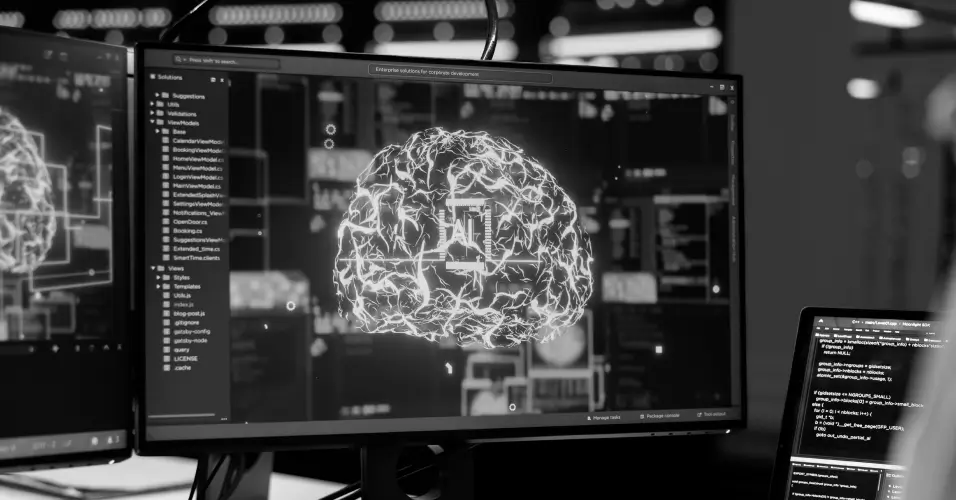
Computer Vision Applications That Turn Visual Data Into Business Decisions
Cameras and sensors generate more operational data than any team can manually review. Computer vision applications process this visual data automatically, detecting conditions, classifying objects, tracking movement, and flagging exceptions in real time at a scale and consistency no human workforce can match. The computer vision applications that create business value are not the ones that demonstrate impressive accuracy in a lab. They are the ones integrated into the operational systems where their outputs change what happens next, without anyone having to look at a screen.
01
02
03
Computer Vision in Retail, From Store Analytics to Loss Prevention
Computer vision in retail addresses the operational visibility gap that has always existed on the shop floor. Foot traffic patterns that determine staffing decisions. Shelf compliance that determines whether the planogram is being followed or whether gaps are building undetected. Queue length that determines when to open additional checkouts. Computer vision retail systems collect this data continuously from existing camera infrastructure and surface it in the dashboards and alerts where store teams can act on it, without manual observation, manual counting, or end-of-day reporting that arrives too late to change anything.
Computer Vision Solutions Built for Production Environments
Computer vision solutions that perform in controlled conditions do not always perform in production. Lighting variability, camera angle inconsistency, occlusion, motion blur, and the sheer volume of frames that need to be processed in real time all create challenges that lab accuracy figures do not reflect. An ai-powered computer vision solution built for production is trained on data that reflects the actual conditions of the deployment environment, tested against the full range of variations that environment produces, and deployed on infrastructure that handles the processing load without latency that makes the real-time outputs unreliable.
Computer Vision Retail Safety and Compliance
Computer vision retail safety monitoring detects hazards, spills, blocked exits, unsafe stacking, in real time and alerts the relevant team before an incident occurs. The same camera infrastructure used for traffic analytics and loss prevention also supports safety compliance monitoring without requiring additional hardware. Computer vision retail safety applications are designed with the specific compliance requirements of the operating environment, including the data handling and privacy obligations that apply to camera-based monitoring in customer-facing spaces.
Our Computer Vision Services
01
Computer Vision in Security Systems
02
Computer Vision Store Analytics and Retail Metrics
03
Computer Vision Retail Intelligence Platform
04
Computer Vision Operational Efficiency in Manufacturing
05
Computer Vision Development Services and Integration
What to Look for in Computer Vision Solutions
Trained on Production Data, Not Lab Data
Integrated With the Systems That Act on the Output
Privacy and Compliance by Design
Computer Vision Engineer Depth, Not Just ML Expertise
What a Computer Vision Services Engagement Delivers
A completed computer vision services engagement produces:
- A use case definition and data assessment covering the visual inputs available and the production conditions the model will encounter.
- A trained computer vision model evaluated against production-representative data with documented accuracy characteristics.
- Deployment infrastructure matched to the latency and throughput requirements, edge, cloud, or hybrid based on the use case.
- Integration with the camera systems, operational platforms, and alerting tools the business already uses.
- Privacy and compliance controls appropriate to the deployment environment and jurisdiction.
- Monitoring and retraining pipelines so the model maintains performance as conditions and requirements evolve.
Frequently Asked Questions
What computer vision applications are most common in retail?
How does computer vision in retail differ from standard video surveillance?
What industries benefit most from computer vision solutions?
Do computer vision development services cover edge deployment as well as cloud?
How do you handle privacy requirements in computer vision in security systems?
What makes an ai-powered computer vision solution reliable in production?
Ready to Turn Visual Data Into Operational Intelligence?
Computer vision solutions that process visual data in real time and connect detections to the operational systems that act on them are production engineering projects, not research experiments.
Insight That Drives Decisions




Happy Users
Feedback
4.9

2k+ satisfied customers

From the start, Pendoah felt like an extension of our team. They understood where we wanted to take WorkLighter and helped us get there with clarity.
Bill West

Pendoah brought real clarity to the ProVal AI vision. They moved fast, understood the compliance challenges, and delivered a solution that made our validation process more efficient and reliable.
Steven Mattos

Pendoah understood the Lymelyt vision from day one. They helped us turn a complex idea into a polished, video-first platform that feels intuitive, trustworthy, and ready to scale.
Damon Pampolina

Pendoah built Airiam with speed and precision. They understood the product quickly and delivered a solution that improved both performance and user experience.
Greg Elmore

Pendoah was the right partner for GALSI. They combined speed, technical depth, and strong execution to build a platform ready for launch.
Dean Zikria
Let's Turn Your AI Goals into Outcomes. Book a Strategy Call.