
SaaS Development Services
SaaS Development Company That Builds for Scale, Not Just for Launch
Most SaaS products are built twice. The first version gets to market. The second version replaces the parts of the first version that were never designed to handle real scale, real customers, or real compliance scrutiny. A saas development company that thinks past the launch date builds the architecture, tenancy model, and security controls correctly the first time. That decision saves the kind of rework that stalls growth and drains engineering capacity at exactly the moment the business needs it most.
01
02
03
What SaaS Application Development Services Cover
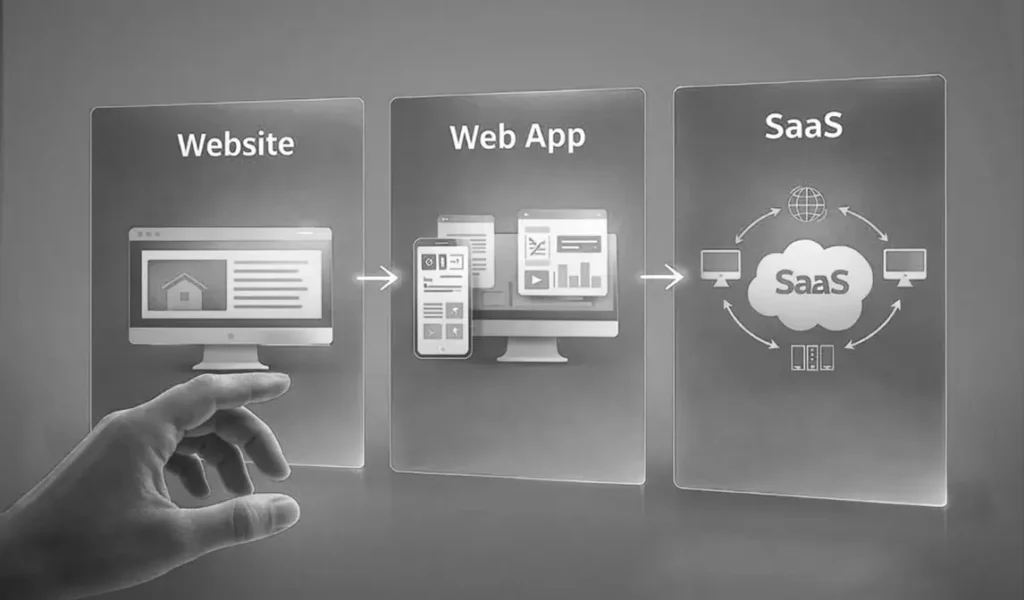
SaaS application development services cover the full scope of building a commercial software product delivered over the internet on a subscription basis. This includes the multi-tenant infrastructure that serves many customers from shared resources without their data ever mixing, the subscription and billing logic that handles plan changes and renewals without manual intervention, the security controls enterprise buyers require before signing a contract, and the onboarding flows that turn a trial user into a paying customer. Each of these is a product decision with technical consequences that need to be resolved before the first paying customer arrives.
SaaS Development, What Gets Decided Before a Line Is Written
The most consequential saas development decisions happen before development begins. Multi-tenancy model, shared schema, shared database, or siloed, determines how the product scales and how data is isolated between customers. Authentication architecture determines what SSO integrations are possible. API design determines what integrations customers can build. These are not implementation details. They are product decisions with long-term commercial implications that cannot be easily reversed once the product has customers depending on them.
SaaS Product Development That Compounds Over Time
The best saas product development produces a platform that becomes more valuable as it accumulates data, customers, and integrations. This requires a data model designed for analytics from the start, an API layer that makes third-party integrations straightforward, and a feedback loop that connects product usage to development priorities. Professional saas product development services build these capabilities in from the beginning so the product improves with scale rather than straining under it.
Our SaaS Application Development Services
01
Product Scoping and Architecture Design
02
Custom SaaS Development for Specific Markets
03
B2B AI Enabled SaaS Architecture
04
Subscription, Billing, and Customer Lifecycle
05
Enterprise Security and Compliance Readiness
Why Product Teams Choose Pendoah as Their SaaS App Development Company
Architecture Before Velocity
SaaS Application Development Company With Regulated Industry Experience
AI Designed Into the Product, Not Bolted On
Full Ownership, No Lock-In
What a SaaS Product Development Company Engagement Delivers
A completed SaaS product development engagement produces:
- A documented architecture blueprint covering multi-tenancy, data isolation, API design, and deployment strategy.
- A production-ready saas application development build with automated scaling and enterprise-grade security controls.
- AI capabilities integrated with the data pipelines and feedback loops required for the models to improve over time.
- Subscription and billing logic handling the full customer lifecycle without manual intervention.
- Enterprise security controls including SSO, RBAC, audit logging, and encryption.
- Full codebase ownership, documentation, and a handover runbook for the internal product team.
Frequently Asked Questions
What do saas development services typically include?
When does custom saas development make sense over building on an existing platform?
How long does saas application development take?
What makes a good saas development company?
Can your saas application development company build for regulated industries?
What is included in professional saas product development services?
- Application Modernization
- AI Powered CRM
- ERP System
- Mobile App Development
- MVP Development Services
- SaaS Development Services
- Web Application Development
Ready to Build a SaaS Product That Scales?
The decisions made in the first few weeks of saas development shape everything that follows.
Insight That Drives Decisions
Happy Users
Feedback
4.9

2k+ satisfied customers
From the start, Pendoah felt like an extension of our team. They understood where we wanted to take WorkLighter and helped us get there with clarity.
Bill West
Pendoah brought real clarity to the ProVal AI vision. They moved fast, understood the compliance challenges, and delivered a solution that made our validation process more efficient and reliable.
Steven Mattos
Pendoah understood the Lymelyt vision from day one. They helped us turn a complex idea into a polished, video-first platform that feels intuitive, trustworthy, and ready to scale.
Damon Pampolina

Pendoah built Airiam with speed and precision. They understood the product quickly and delivered a solution that improved both performance and user experience.
Greg Elmore
Pendoah was the right partner for GALSI. They combined speed, technical depth, and strong execution to build a platform ready for launch.
Dean Zikria
Let's Turn Your AI Goals into Outcomes. Book a Strategy Call.