Design Interfaces That Make Intelligence Usable
Artificial intelligence only succeeds when people can understand and trust it. Many AI projects fail not because the model underperforms, but because the interface does. Complex predictions, opaque insights, and unintuitive dashboards create friction that kills adoption.
Executives and product teams often ask:
01
02
03
Without thoughtful design, AI solutions for business risk becoming black boxes that users resist, misunderstand, or abandon.
Designing the Human Side of AI
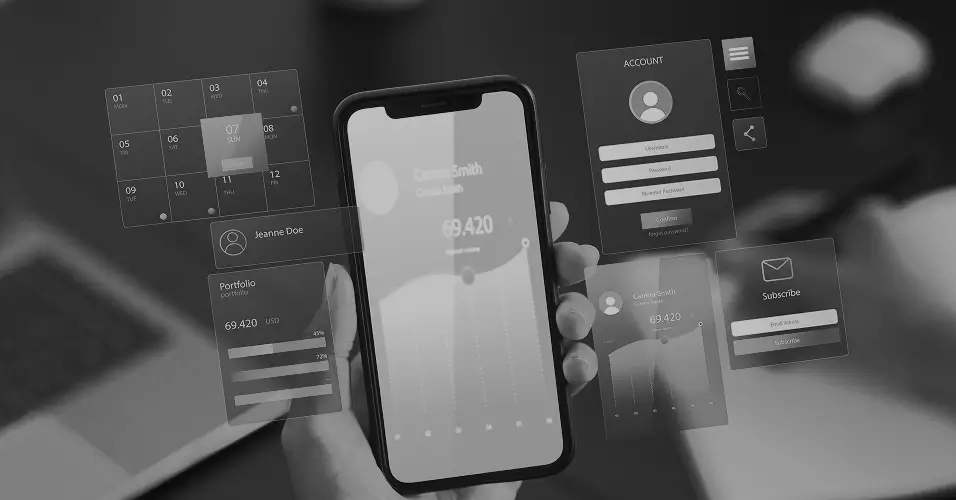
Our UX/UI Design for AI & Digital Products service transforms complex algorithms into simple, meaningful experiences. We design interfaces that build confidence, clarity, and usability around your AI capabilities.
From dashboards that visualize real-time predictions to conversational interfaces that feel natural, we combine user experience, cognitive psychology, and system logic to make AI human-centered and adoption-ready.
From Algorithm to Adoption
For executives, effective design means faster adoption and better ROI from every AI initiative. For end users, it means clarity, trust, and control.
Organizations using our design systems achieve:
- Up to 3x higher user adoption rates for AI-driven applications.
- 40% fewer support requests post-launch due to intuitive interaction flows.
- Significant improvement in decision accuracy through explainable AI visualizations.
By focusing on design as a bridge between intelligence and usability, we ensure your SMB AI solutions succeed where most fail: in real-world use.
How We Design for Intelligent Systems
01
Discovery & Understanding Context
02
User Journey Mapping & Information Architecture
03
Wireframing & Concept Visualization
04
High-Fidelity Interface Design
05
Prototyping & Usability Testing
06
Design System & Handoff
Why Our Design Approach Works
AI-Specific Expertise
Explainable AI Interfaces
Cross-Functional Collaboration
Accessibility and Ethics
Scalable Design Systems
Human-Centered Intelligence
AI without empathy is just automation. True transformation happens when technology and design work together to make intelligence accessible. By designing for understanding, trust, and control, you bridge the gap between human and machine, and make AI adoption in the SMB seamless and scalable.
This is how digital products become decision partners, not just tools.
Frequently Asked Questions
Can AI design systems scale across multiple digital products?
How do you ensure accessibility in AI-driven interfaces?
What tools and technologies do you use for AI interface design?
How do you design trust into AI-driven interfaces?
What are the key principles behind successful AI UX design?
How is designing for AI different from traditional UX/UI design?
- UI/UX Design for AI and Digital Products
- AI Prototyping & MVPs
- Generative AI Applications
- Computer Vision
- Natural Language Processing (NLP)
- Machine Learning & Deep Learning
Design That Builds Trust
Make your AI solutions usable, lovable, and successful. Schedule a Design Consultation to explore how intuitive design can improve adoption, ROI, and user satisfaction.