
RAG Chatbot
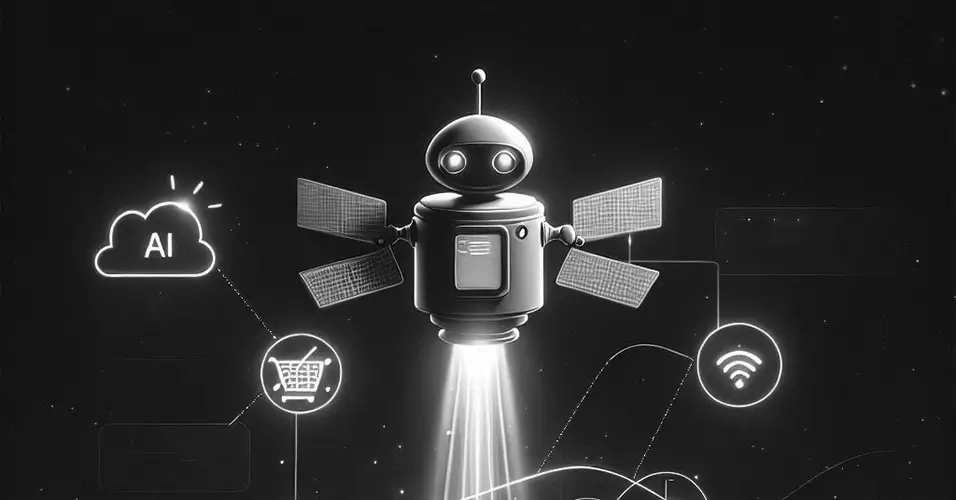
RAG Development Services That Ground AI in What Your Business Actually Knows
A general-purpose language model knows a great deal about the world. It knows very little about the specific products, policies, processes, and data of a particular business. Ask it a question about a specific return policy or a particular product specification and it will generate an answer that sounds authoritative but may be entirely wrong. Retrieval-augmented generation solves this. A rag chatbot connects the language model to the business knowledge base so every response is grounded in accurate, current, business-specific information rather than generated from model memory. The result is an AI that answers questions about the actual business accurately, consistently, and traceably.
01
02
03
What RAG Development Means in Practice
RAG stands for retrieval-augmented generation. It is an architecture pattern that adds a retrieval step between the user’s query and the language model’s response. When a user asks a question, the system first searches a curated knowledge base, documentation, product information, policy content, internal data, and retrieves the most relevant information. That retrieved content is then passed to the language model as context alongside the query, and the model generates a response grounded in the actual retrieved content rather than in its training data alone. RAG development produces rag chatbots that are accurate for the specific domain, auditable, and updatable as business knowledge changes without requiring the model to be retrained.
RAG Chatbots That Are Accurate, Auditable, and Current
The defining advantage of rag chatbots over standard chatbots is accuracy on business-specific content. A standard chatbot trained on a snapshot of documentation becomes outdated as soon as the documentation changes. A rag chatbot retrieves from the live knowledge base so responses reflect the current state of the information, updated pricing, revised policies, new product specifications, without requiring retraining. Every response can be traced back to the source document it was generated from, which matters significantly in compliance environments where AI outputs need to be verifiable.
AI/RAG Product Development for Business Applications
AI/rag product development moves beyond internal knowledge base chatbots to commercial applications where RAG is the core product capability. A rag ai chatbot embedded in a SaaS product that answers questions grounded in each customer’s own data. A legal research tool that retrieves from a curated corpus of case law and generates structured summaries. A compliance assistant that retrieves the applicable regulatory requirements for a given scenario and generates a structured response. In each case the rag chatbot is not a support tool but the product itself, which means the accuracy, latency, and reliability requirements are product requirements rather than configuration targets.
Our RAG Chatbot Development Services
01
Knowledge Base Audit and Structure
02
Chatbot RAG Architecture Design
03
How to Create a RAG Chatbot, Build and Integration
04
LangChain RAG Chatbot Development
05
Custom RAG Development Services for Regulated Industries
Why RAG Development Requires More Than Connecting a Model to Documents
Retrieval Quality Determines Response Quality
Knowledge Base Structure Is Not Optional
Compliance Is a Retrieval Problem as Well as a Response Problem
Citation Is Not a Feature, It Is a Requirement
What a RAG Development Services Engagement Delivers
A completed RAG development engagement produces:
- A knowledge base audit identifying content gaps, structural issues, and outdated information that would affect retrieval quality.
- A chatbot rag architecture designed for the specific domain, user base, and compliance requirements.
- A production-ready rag chatbot grounded in business-specific content with source citation on every response.
- Access controls ensuring users retrieve only content they are authorised to access.
- Integration with dynamic business data sources where live information is required alongside static documentation.
- Performance evaluation against a representative test set and a defined improvement process post-deployment.
Frequently Asked Questions
What makes a rag chatbot different from a standard AI chatbot?
How long does rag development typically take?
What knowledge base content does a rag ai chatbot work with?
Can your custom rag development services handle access controls?
What is a langchain rag chatbot and when does it make sense?
How do rag chatbots stay current as business information changes?
Ready to Build a RAG Chatbot Grounded in Your Business Knowledge?
A rag chatbot that answers questions accurately, cites its sources, and stays current as business knowledge evolves is a meaningful upgrade from a general-purpose AI assistant.
Insight That Drives Decisions


Happy Users
Feedback
4.9

2k+ satisfied customers

From the start, Pendoah felt like an extension of our team. They understood where we wanted to take WorkLighter and helped us get there with clarity.
Bill West

Pendoah brought real clarity to the ProVal AI vision. They moved fast, understood the compliance challenges, and delivered a solution that made our validation process more efficient and reliable.
Steven Mattos

Pendoah understood the Lymelyt vision from day one. They helped us turn a complex idea into a polished, video-first platform that feels intuitive, trustworthy, and ready to scale.
Damon Pampolina

Pendoah built Airiam with speed and precision. They understood the product quickly and delivered a solution that improved both performance and user experience.
Greg Elmore

Pendoah was the right partner for GALSI. They combined speed, technical depth, and strong execution to build a platform ready for launch.
Dean Zikria
Let's Turn Your AI Goals into Outcomes. Book a Strategy Call.